
Find Colbert Property Records
Start with the physical address in QPublic. The parcel card there shows the parcel number, any owner clue, the mailing address, and the legal description. Copy all of it down. Those identifiers carry into the Clerk of Court deed index and the GSCCAA search, where a deed record can be matched to the same parcel in Colbert. They also tie the tax account to the parcel map.
Ask City Hall the remaining questions. Staff there can confirm whether the land sits inside Colbert and which municipal approvals already exist for it.
- Search the Colbert address in Madison QPublic.
- Preserve the parcel and legal-description text.
- Search Colbert and Five Forks deed clues.
- Check tax and map records.
- Request city approvals from Colbert City Hall.
Entity owners, old road descriptions, and parcel splits often need name and plat searches instead. The county search steps walk through the detailed portal fields for those cases.
Colbert Property Records Follow Jurisdiction
Jurisdiction drives everything here. The county Clerk holds the deeds and plats. The assessor maintains the digest and parcel link. The Tax Commissioner keeps the billing records. City Hall keeps whatever Colbert itself created, including council, approval, and ordinance files. County instructions require a city approval letter for any work within Colbert limits.
Madison County Records (deeds, taxes, parcels)
County offices hold deeds, assessment records, tax accounts, and recorded plats.
Search Colbert Property Records Under Five Forks
The town started as Five Forks and took the Colbert name in 1909. Deeds, newspaper notices, and local histories from earlier decades may use the old name alone. A chain of title can go cold. A place reference can too. Search both terms and see what surfaces. Then confirm any match through the legal description and the recorded image itself.
The railroad reached the junction in 1891. The depot dates to 1892. Those facts help anchor historic references. They say nothing about the bounds or owner of a modern parcel.
Colbert Property Records Outlived a City Hall Move
City Hall operated out of the old railroad depot until December 2020. The office then moved into the former school building. A historic document might therefore point to a records location that differs from today's contact. Route current requests through the official city page. Keep the depot clue in mind for old council or civic material.
The city publishes no municipal archive inventory. Ask City Hall directly which older records remain in city custody. Some may have been transferred or stored elsewhere.
Colbert Subdivisions Need Plat Proof
No official roster of Colbert subdivisions exists. Legal notices still supply precise leads, though. Pair each subdivision name with its lot and plat citation, then request the recorded image from the Clerk.
| Neighborhood / Subdivision | Era | In the Records |
|---|---|---|
| Madison Oaks | Recorded by 2015 | Lot 19, Plat Book 34 Page 211, parcel 30775. |
| Timber Ridge | Named in 2023 notice | Use the notice as a lead and verify the recorded plat. |
| Five Forks area | Historic name | Search old place wording, then match deed and parcel. |
A subdivision name alone proves little. Add the lot, block, acreage, parcel, and book and page. Treat QPublic as a reference only, and let a survey control any exact boundary work.
Colbert Property Records Do Not Follow ZIP Alone
ZIP code 30628 reaches beyond the municipal line. A Colbert mailing address can therefore sit under county zoning. That means county approval, not city approval. Confirm the parcel in QPublic first. Then ask City Hall whether it falls inside the incorporated area. Either way, the deed and plat stay with Madison County.
This check matters most when a single block mixes jurisdictions. Postal place names alone reveal nothing about zoning or permit custody.
Colbert Property Records Lack a Public Permit Index
The city offers no searchable permit database or municipal search fields. The practical route is direct contact. Give City Hall the exact address and parcel number. Then ask for approval letters, permits, zoning actions, and council records. County-side records and open-records requests go through County Building Inspections.
The lack of a portal proves nothing. A permit may still exist. A county portal result is never a complete city file.
Route Colbert Property Records Through Official Contacts
When Colbert's own site is unavailable, the official Madison County municipalities roster confirms the city contact route.
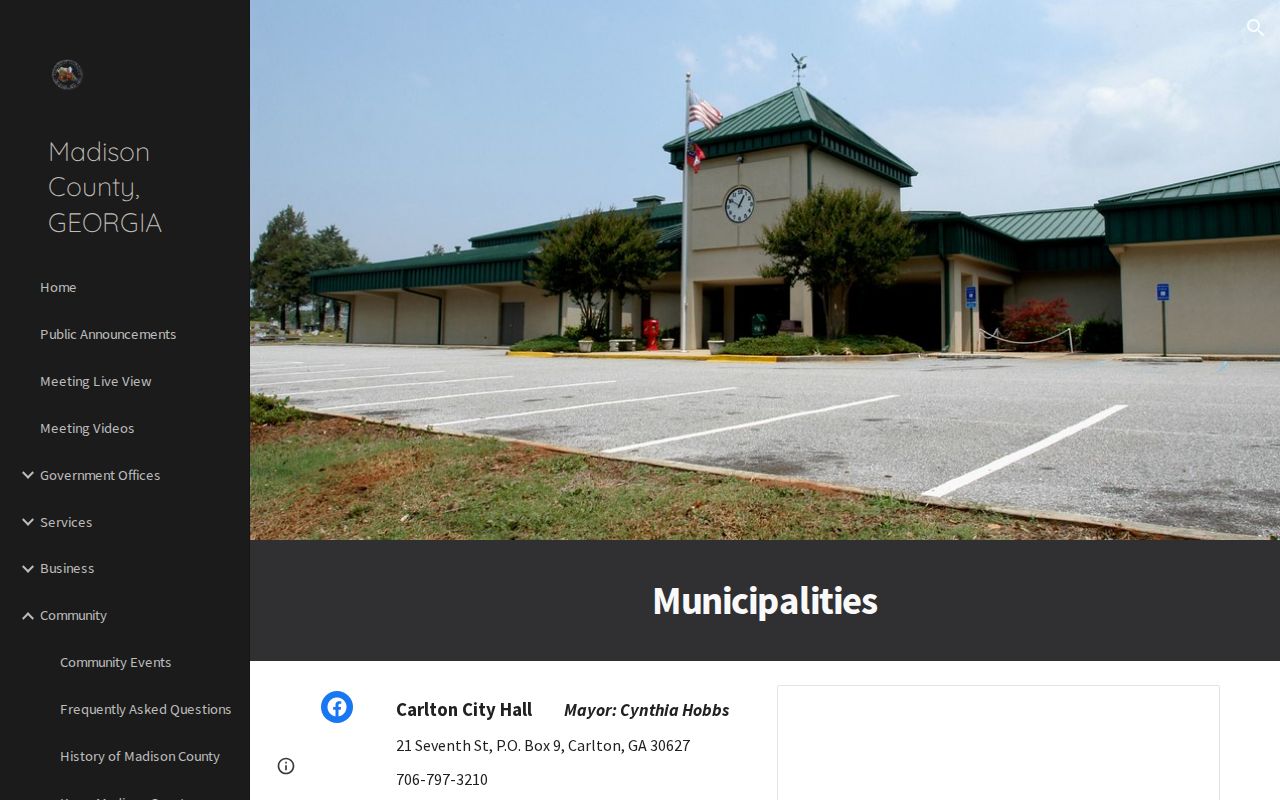
The roster points a request in the right direction. For the underlying land record, the Clerk and assessor remain the sources.
Colbert Neighbors Require Manual Matching
Madison County publishes QPublic as its parcel-map bridge. However, it offers no adjacent-parcel or buffer tool. Find the subject parcel first. Note any adjoining parcel identifiers the map shows, then search each one separately. A recorded subdivision plat can fill in the lot pattern. Use it when the map tools fall short.
Mailing addresses do not always match the land itself. List each neighbor by parcel and situs. Treat the tax-roll owner as a clue, and check it against the latest deed.
Colbert Values Resist Broad Claims
The city publishes no annual city-only value trend. Compare similar 30628 parcels within the same published digest instead. Note fair-market value, the 40 percent assessed value, land traits, improvements where shown, and exemptions. The assessor notes that qualifying owners inside Colbert may claim a separate city homestead exemption. City Hall must confirm it.
Historic status, railroad proximity, and population figures are context, not valuation evidence. A deed price reflects one transaction, and an assessment is never a sale appraisal.
Colbert Deeds Cross an Online Cutoff
The GSCCCA index for Madison County reaches back only to 1999. Earlier Colbert and Five Forks deeds live in the Clerk's books and office indexes. Begin with the newest deed. Copy the prior reference it cites. Chase grantors backward one transfer at a time. Wherever a text search allows it, run both place names. The same tract can appear under either label.
The Madison County Library sells a local History of Colbert volume for $25. It keeps genealogy resources on hand. It supplies names and context. Verify any land claim it raises against a deed, plat, probate file, or tax record.
Colbert Records Need Confirmation
Colbert property records can yield an owner clue, a value, a parcel identifier, a deed, a lien, a plat, a tax account, or a public approval. No single source settles everything. Title, possession, boundaries, and market value each demand their own proof. One document cannot carry all four. A recent deed can outrun the digest, parcel lines are not surveys, and a mailing address proves nothing about residence.
Lawful use. Use public files for land research, purchase checks, estate work, and civic review. Never use owner information to stalk, harass, or harm anyone.
Library Clues Deepen Colbert Property Records
The Madison County Library's Heritage of Genealogy Room holds cemetery records, yearbooks, and newspaper access. It also offers research databases. Those tools can tie a family name or an old place term to its era. They do not replace the Clerk's index. Write down each spelling, date, and source. Then test the clue against the deed's grantor, grantee, book and page, and legal description.
City Hall sells the local History of Colbert volume for $25. It adds names, dates, and civic color around the depot, the school, and the old junction. Even so, a local account is only a lead. Check it against the recorded deed, plat, tax file, or council record. Do that before treating it as fact about one tract. That discipline matters most where Five Forks and Colbert surface in different generations of the same property story.
Resolve Gaps in Colbert Property Records Offline
The county publishes no official annexation sequence, municipal archive catalog, or parcel-level permit register. It offers no adjacent-parcel buffer tool or city-only value series. Those gaps call for focused office requests. Start with the exact address, parcel key, subdivision, and a likely date.
Route each question to its custodian. City Hall takes municipal approvals, ordinances, council matters, and archive questions. Planning or Building Inspections holds county approvals. The Clerk supplies deeds and plats. The assessor explains the published digest and Colbert homestead treatment.
Under the Georgia Open Records Act, request an existing record. Name a useful date span. The agency generally responds within three business days and may charge lawful production costs. A direct reply becomes part of the Colbert property records trail. It stands in even where no public portal exists.
Keep every office response with its date and parcel identifiers. Colbert City Hall answers municipal questions. Madison County Planning, Building Inspections, the assessor, and the Clerk answer county ones. A reply from one office says nothing about another custodian's files. Route each follow-up by record type.
Older Colbert research should preserve both city names. Search Five Forks and Colbert together. Add owner variants, subdivision terms, and book and page references. The former depot and school add color, but a landmark is not a legal description. Match each historic clue to land through a deed, plat, tax record, or probate file. A council action also works.
Modern work needs the same care. ZIP code 30628 can reach beyond the city line. The county offers no public buffer tool. Confirm municipal status. Use the recorded plat for adjoining lots. Inspect each QPublic parcel separately. Note each record's date and which web feature the county does not publish.
A final Colbert file should hold the current parcel card, the newest deed citation, the plat reference, and the tax record date. It should also hold the City Hall response. Add both Colbert and Five Forks to the search notes. Do this whenever historic sources use different place names. Keep the request date beside each office response.