
What Madison County Deed Records Convey
Madison County deed records cover far more than routine home sales. Each instrument type explains why an interest changed hands and what else deserves a look. The GSCCCA Real Estate Index offers a long Georgia instrument menu for Madison County. The recorded image then supplies the real terms. These include the legal description, signatures, and the recorder's stamp. Read the instrument itself before drawing conclusions from the index line.
| Deed type | What it does | Typical record question |
|---|---|---|
| Warranty deed | Transfers title with stated promises from the grantor | Was land sold through a standard conveyance? |
| Quit claim deed | Transfers whatever interest the grantor may hold | Was a possible interest released or corrected? |
| Deed from estate | Conveys property through an estate representative | Did ownership change after a death? |
| Foreclosure or sheriff's deed | Records a transfer following a legal sale process | Was the transfer linked to enforcement? |
| Tax sale deed | Documents a tax-sale conveyance | Did delinquent tax proceedings produce the deed? |
| Gift or trustee's deed | Conveys through a gift or fiduciary act | Was value paid, or did a trustee act? |
Plenty of instruments touch the same land without being the ownership deed you want. A security deed, lien, release, easement, restrictive covenant, timber deed, or court order can all sit against one tract. Search each related instrument on its own. Together they explain financing, access rights, restrictions, timber or mineral interests, and later releases.
Search Madison County's Local Recorder Index
The local Madison recorder index opens four direct routes into the deed records. It also posts a recording-through date. One caution, though: the site warns that indexing may lag behind that date. The gap matters most right after a closing.
| Search mode | Entry | Best use |
|---|---|---|
| Grantor/Grantee Name | Party role and name | Find transfers to or from a known person or entity |
| Legal Description | Description terms | Match a tract, lot, block, phase, or subdivision |
| Book and Page | Known recording citation | Pull the exact indexed reference |
| Recording Date | Start and optional end in MMDDYYYY | Review instruments filed in a time span |
Names cast a wide net. Use the legal description and recording date to separate people who share a name. Book and page is the strongest route when it comes straight from a current deed, plat, tax-sale notice, or assessor record. Treat the index as a finding aid. The recorded image remains the document to read. For counter help, contact the Madison County Clerk of Superior Court, Katie Cross, at 91 Albany Avenue in Danielsville, phone 706-795-6310. That office also keeps plats, liens, and Superior Court filings tied to Madison County property. Note: A newly recorded instrument can appear after the local index's stated close-of-business date. Confirm timing with the Clerk when it matters.
Use GSCCCA Fields to Narrow Madison Deeds
The statewide system adds structure that a local index lacks. For participating records, it supports name, book/page, subdivision, lot, street-address, map, instrument-type, daily, and PT-61 search paths. The GSCCCA name form exposes enough fields to make a Madison County property search precise. Pick the fields that match what you already know.
| Field | Control | How to use it |
|---|---|---|
| Party Type | Grantor, grantee, or all parties | Choose the direction of the transfer |
| Instrument Type | Document category | Separate deeds from liens, releases, and other filings |
| County | Geographic filter | Set Madison before reviewing results |
| Name | Party entry | Try entity names and reasonable name variants |
| Date range | Beginning and ending dates | Focus on a likely transfer period |
| Page size | Result count | Control the number of rows returned |
The book and page form asks for county, book, and page. The property form requires a subdivision for that mode. Rural tracts without a known subdivision may be easier to find by party name. Book and page also works for those. The official name-search page displays the form layout you'll work from.
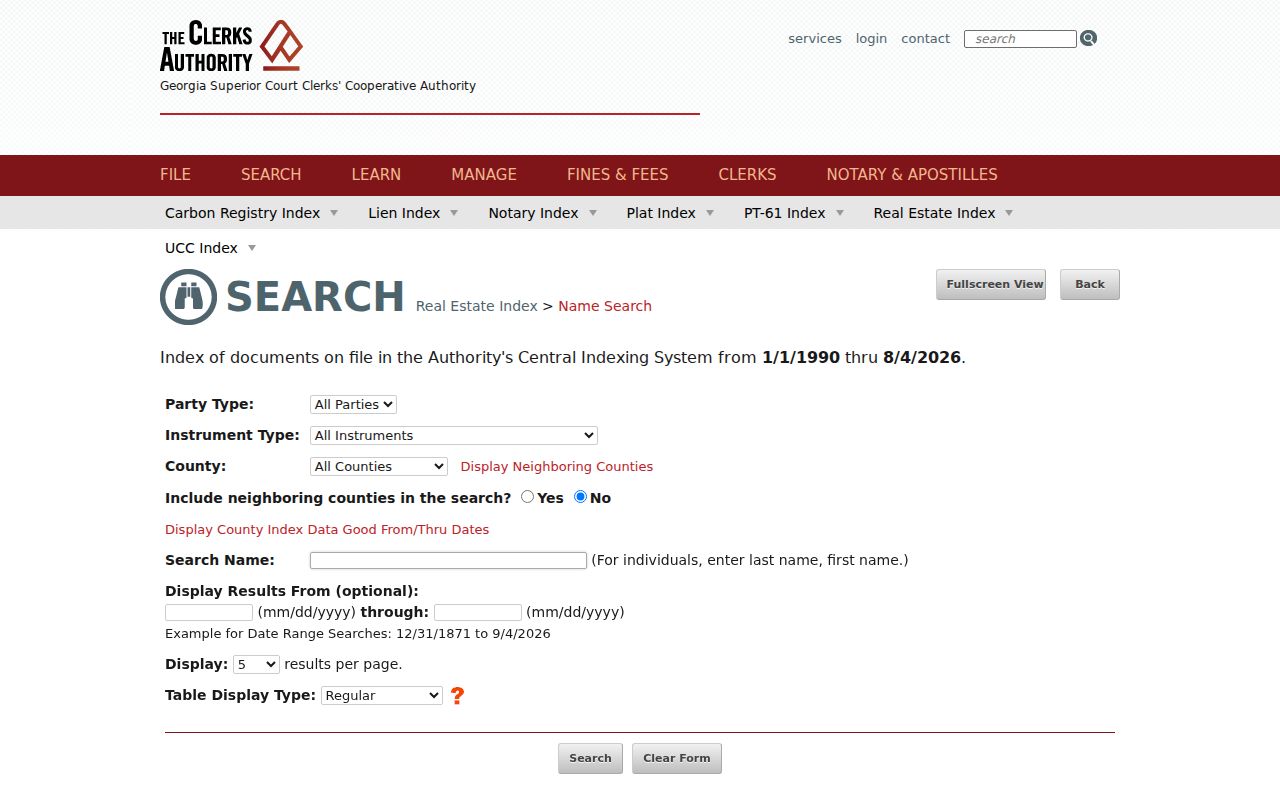
Set the county and party-role controls first. Then narrow the date range and compare each result's instrument type against its recording citation.
Reconstruct a Madison County Grantor-Grantee Chain
A chain of title is the ordered set of conveyances affecting one piece of land. Work backward from a reference you trust, such as a current deed or tax record. Names alone will not carry the chain. People can own several tracts. Two owners can share a name.
- Find the current purchase deed with the current owner shown as grantee, the party receiving the interest.
- Read the grantor, the party conveying the interest, plus the legal description, book/page, recording date, and any prior-deed reference.
- Search that grantor as a grantee in an earlier period. Confirm that the lot, acreage, plat, and boundaries describe the same land.
- Repeat until the online run stops, then continue at the Clerk with the cited deed book, reverse index, or predecessor-county record.
- Grantor
- The party transferring an interest.
- Grantee
- The party receiving an interest.
- Chain of title
- The linked sequence of recorded transfers for the same property.
- Book/page
- A volume and page citation for a recorded instrument.
- Instrument number
- A unique filing reference used in some index results.
Not every link follows the simple seller-to-buyer pattern. A quit claim, estate transfer, court order, or name change can interrupt it. When a link seems missing, search every party and broaden the instrument types. Probate records may identify a representative. But the later deed shows the actual conveyance of the land.
Madison's 1999 Digital Boundary
Treat January 1, 1999 as the dependable starting line for Madison County deed records in the central GSCCCA index. The live interface describes wider dates. GSCCCA keeps adding older historical data, but county participation varies. A Madison-specific notice sends pre-1999 research to the Clerk's physical office. Bring every citation you have to the courthouse. That includes party names, approximate year, deed book/page, plat book/page, map-and-parcel number, and legal-description phrases. Public courthouse terminals reach the state databases free during business hours. Staff can explain the current process for plain or certified copies. They can also quote the exact charge. Madison County was created in 1811. It drew land from parts of Clarke, Elbert, Franklin, Jackson, and Oglethorpe counties. A chain reaching the county's first books may continue in one of those predecessor counties. That jurisdictional handoff does not mean a deed vanished. It simply moved with the land.
Online is not the whole archive. Pre-1999 Madison deeds require the Clerk's physical records route, and pre-1811 chains may lead to predecessor counties.
Plats Keep Madison Deed Records on the Same Land
Legal descriptions often point to a recorded plat. Madison County legal notices offer useful examples of the pattern. Pine Meadows carries lot, block, and Plat Book 13 references. Royal Oaks Phase II points to a 2006 final plat at B158 Page 1A. Northridge cites Plat Book 25 Page 20. These are finding aids, not substitutes for the Clerk's recorded image. At each step, compare the subdivision name and phase. Also compare lot, block, acreage, land district or GMD, road name, and plat citation. A house number can be newer than the plat itself. The county 911 Center assigns new addresses. A deed keeps an older legal description for the same tract. A Royal Oaks notice pairs its recorded plat with a later Scarlet Oak house address. That local quirk is worth remembering. When a street search fails, go back to the plat and deed language instead of stopping. Note: Preserve every letter and punctuation mark in Madison map-and-parcel references. Formats vary and may distinguish nearby tracts.
Security Deeds, Releases, and Madison Liens
Georgia lenders usually protect a loan with a security deed. That instrument is not the deed that conveys ownership. Both may be recorded the same day. They remain separate documents in Madison County property records.
A later release or cancellation shows the obligation was satisfied. Matching a release back to its security deed takes parties and the recording reference. An index row may still look open. But a matching cancellation may sit under a different instrument type. And an ownership deed alone proves nothing about whether every encumbrance was cleared.
Search direct and reverse lien entries, security deeds, assignments, releases, cancellations, materialman's liens, notices, and court orders as the question demands. The statewide lien index reaches back to at least January 1, 2004. It supports search by party, date, geography, book/page, and image paths.
Images, Courthouse Terminals, and Madison Copies
A free limited-use GSCCCA account covers deed, lien, plat, and UCC indexes. It shows summary data only. Images stay off limits. A regular account runs $14.95 for a calendar month or part of one. Images are viewable at no added charge, and printable for $0.50 per page. Premium pricing is separate.
No subscription is needed at the public search terminal in the Superior Court Clerk's office. Certified copies come from the Clerk through the applicable certification route. The office can quote the current fee. Mail requests work best when they identify the parties, document type, date, and book/page. Confirm payment and return-mail requirements before sending anything.
The county recorder's own online page displays its four search choices and the courthouse notice, as shown on its official source.
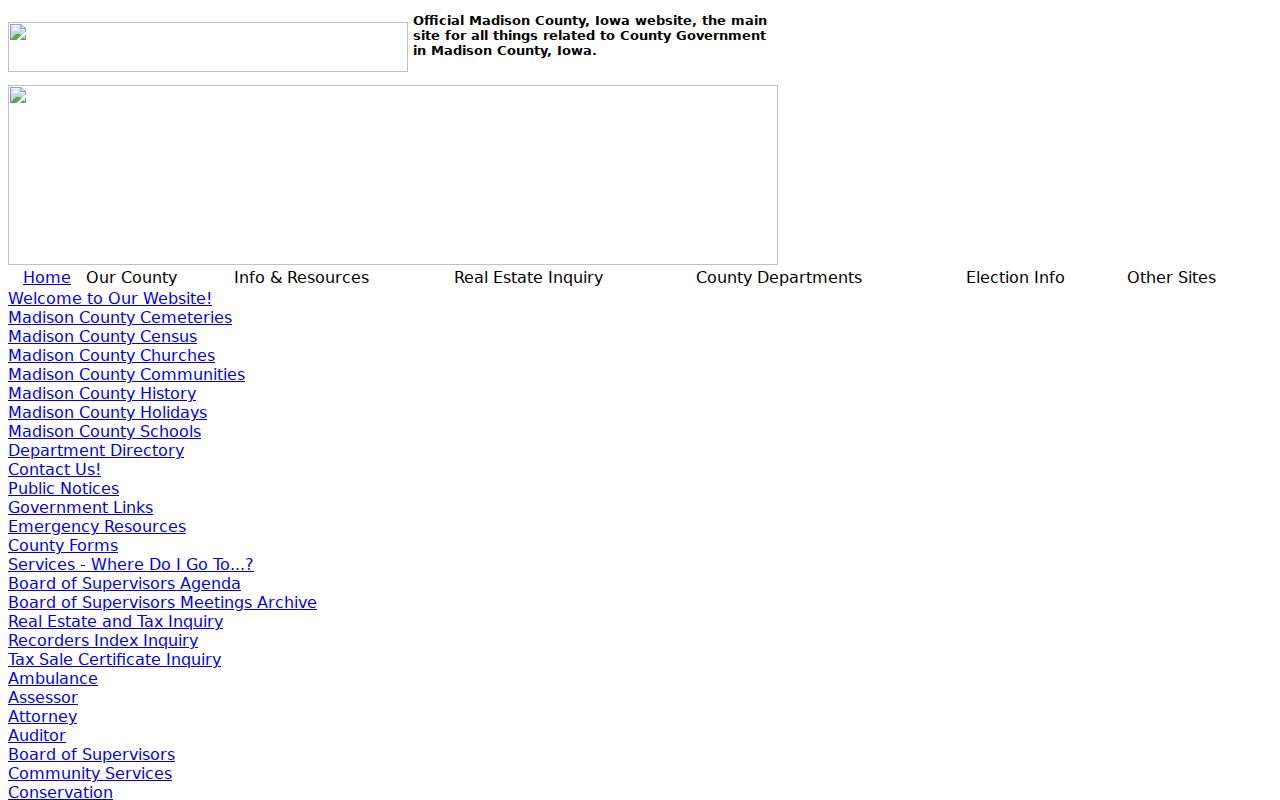
Its book/page and recording-date routes make solid fallbacks whenever a party-name search returns too many hits.
Free Filing Alerts for Madison County Owners
The statewide Filing Activity Notification System, known as FANS, is free. Owners and authorized users register for alerts built on owner-name or property criteria. The service looks forward only, though. It cannot rebuild past deed records or replace periodic review of the index.
FANS relies on index data clerks transmit. It does not promise complete or error-free notice. An alert is best treated as a prompt. Inspect the official filing itself, and contact the Clerk about anything unfamiliar. The Georgia Attorney General also points owners worried about title theft toward FANS.
Scale offers some context. GSCCCA reported adding 19.1 million images statewide in fiscal year 2025. That growth does not shift Madison County deed records from their reliable 1999 starting point. Nor does it put every older local book online.
Obtain a Madison County Deed Copy
Start online when the index and image access fit the recording date. Save the citation for the result. Then decide whether an ordinary print suffices. Or consider a certified copy from the custodian if the intended use calls for one. A print from an online account and a Clerk-certified copy serve different purposes.
If the online route fails, visit or call the Clerk. You can also use the courthouse terminal or mail a detailed request. Georgia's Open Records Act lets any person request existing public records. It generally requires a response within three business days. The baseline cost is 10 cents per photocopied page plus reasonable production cost. The first quarter hour of staff time is free. Court certification may carry a separate charge. Confirm the total and delivery method before paying.
For an older deed, spell out the request precisely. Ask for an index entry, the full recorded image, a plat, or a certification. That distinction matters. Without it, a request can return a summary. That fails when the full legal description is what the Madison County parcel actually needs.
Recorded does not mean guaranteed. Madison County deed records show instruments accepted for recording. They are not a title opinion, and unrecorded interests or unresolved defects may exist.